Sercifer
  12.05.2026
  775
775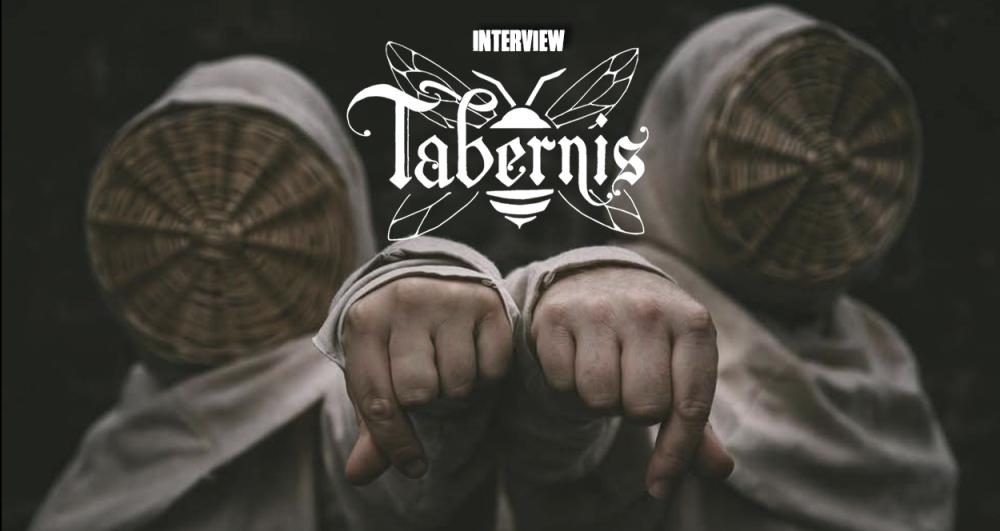
Tabernis summon the shadows for their debut album, Seasons of the Dark Hive, coming April 24, 2026 via Napalm Records. Born out of a passion for history, the enigmatic folk duo created an immersive sound, with bagpipes and davul bringing medieval times to life. Tabernis intertwine ancient tradition and dark mysticism, their haunting harmonies gifting melodies to the delicate art of beekeeping. Already having performed at major festivals like Wacken and Summer Breeze Open Air off of their debut EP, Seasons of the Dark Hive will divulge more of the band’s secrets to an ever-growing following.
Para leer la entrevista en español: Entrevista a Tabernis
Metallerium: Hello and welcome to Metallerium.com! Thank you for taking the time to talk with us today. We are grateful to talk about Tabernis and your first studio album “Seasons of the Dark Hive”, along with many other topics related to your music. Let’s start asking how are you? And how is the band during these days for the release of the new album?
Tabernis: We are doing well, thank you. We are really happy about the release of Seasons of the Dark Hive. It is an important step for us, and we are glad to finally share it. At the moment, we are focused on what comes next, especially preparing the upcoming live dates. For us, bringing the album to the stage is essential, it is where everything truly takes shape.
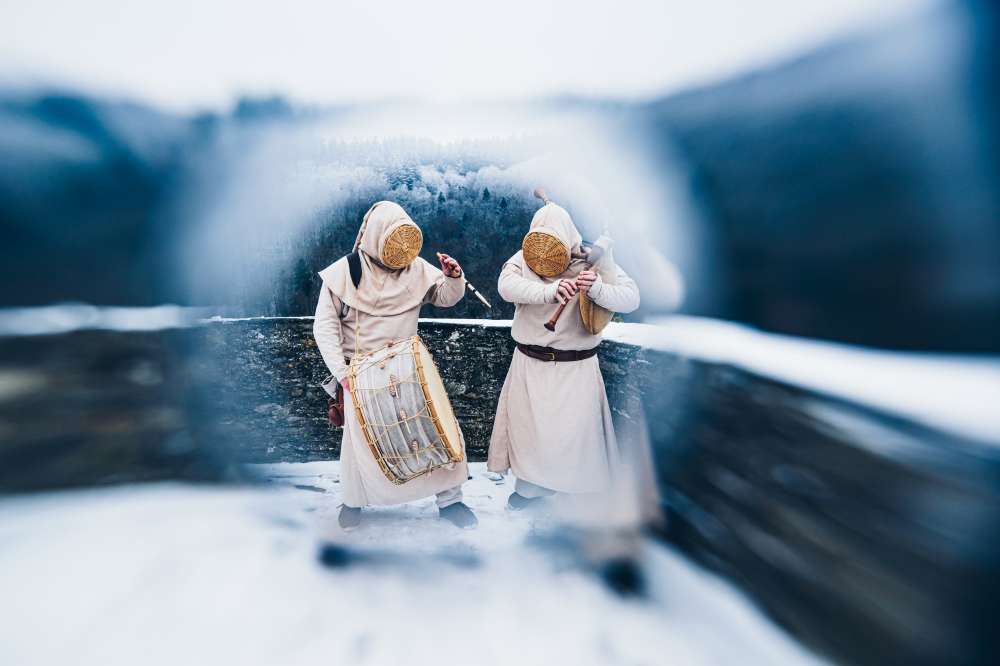
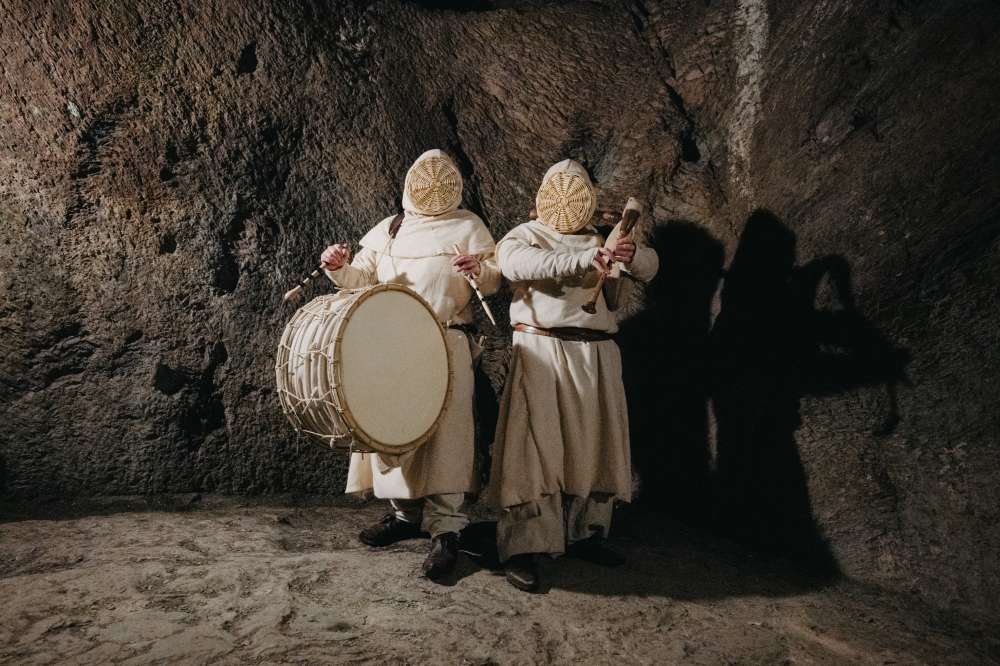
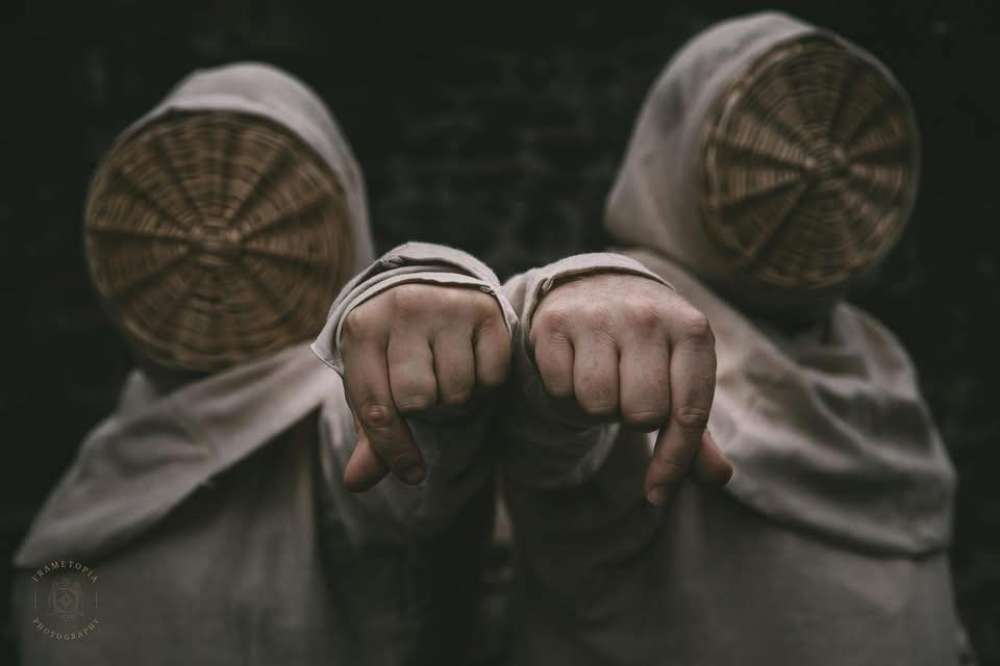
Metallerium: You appear on stage in medieval beekeeper outfits, including distinctive basket helmets. How does this visual anonymity allow you to disappear and let the music speak for itself?
Tabernis: The idea is not only anonymity, but a shift of focus. By covering our faces, we step away from individual identity. What remains is the sound, the movement, and the presence on stage. It allows the audience to engage with the music without attaching it to a person. These outfits are also rooted in historical representations of beekeepers. They bring a symbolic dimension, connected to the Hive, to the collective, and to something that exists beyond the individual. In that sense, we do not disappear completely, but we become part of a larger structure.
Metallerium: You’ve described the hive as a "wax fortress" and a symbol of absolute unity. How do you translate the biological organization of bees into a message for human society?
Tabernis: We use the hive primarily as a symbolic structure, not as a direct model to apply to human society. Its organization can be perceived as a form of unity, but also as something more complex. It is a system where everything is interconnected, where each element has a role, and where the balance remains fragile. What interests us is this duality. The hive can represent cohesion, but also raise questions about individuality and structure. Rather than delivering a message, we propose an image. The audience is free to interpret it, depending on what they perceive in it.
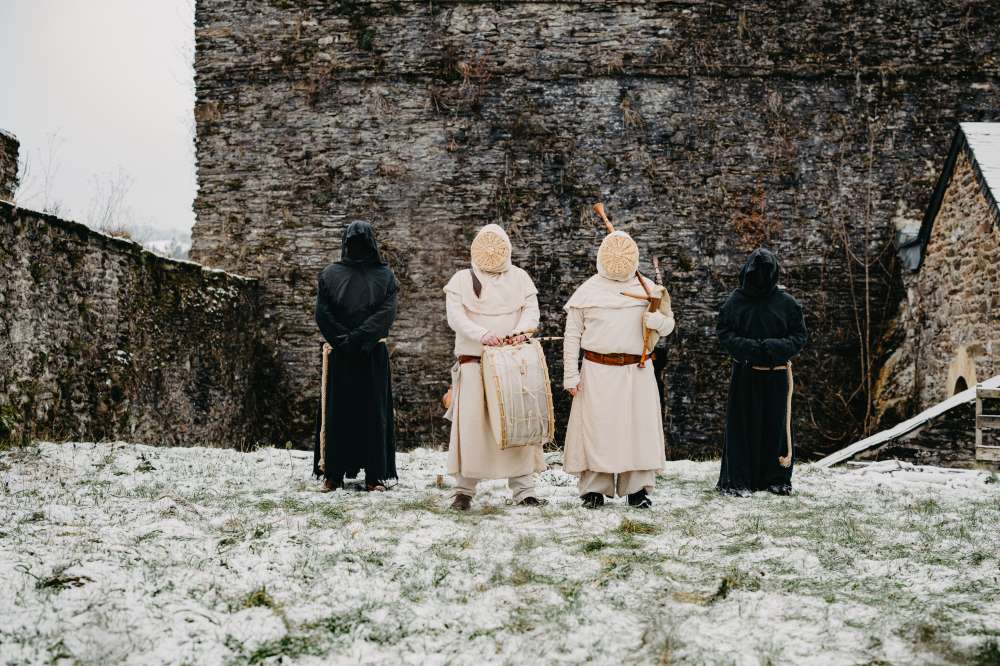
Metallerium: You rely almost exclusively on the bagpipe and the davul drum. How do you push these primitive instruments to capture complex emotions like those in "Tenebrae," which you’ve called a "sanctuary of shadow"?
Tabernis: These instruments may appear limited, but they allow a very direct connection between intention and sound. When we compose, we focus on the intention behind each piece. It is not about multiplying elements, but about pushing a single idea as far as it can go. With the bagpipe and the davul, everything is exposed. The repetition, the dynamics, the pressure of the sound, all of this becomes a way to shape emotion. In a piece like Tenebrae, the goal is not to describe something, but to create a space. A kind of tension that builds, holds, and transforms over time. The simplicity of the instruments becomes a strength. It forces us to be precise, and to carry the intention fully.
Metallerium: The album is presented as an "apicultural ritual." How do the different seasons—like the harvest in "Apes Saltis" or the twilight in "Mel Obscurum"—guide the emotional journey of the record?
Tabernis: The idea of an apicultural ritual comes from the way the album is structured. The seasons are not used as a literal description, but as phases of a cycle that guide the movement of the record. Each one carries a specific tension and energy. In a piece like Apes Saltis, there is something more physical, more active, connected to gathering and movement. In Mel Obscurum, the atmosphere shifts toward something more restrained, more introspective, closer to a form of decline or transition. These contrasts are essential. They allow the album to move, to evolve, rather than remain in a single state. The emotional journey comes from this progression. It is not linear, but it follows a cycle, where each phase prepares the next.
Metallerium: You included renditions of 13th-century works like Walther von der Vogelweide's "Palestine Song" (Mel Obscurum) and the French dance tune Bransle du maître de la maison. What is your process for adapting these ancient melodies into your "Dark Hive" style?
Tabernis: Pieces like those attributed to Walther von der Vogelweide exist in multiple versions, and their original context is only partially known. This leaves room for interpretation. We take the melodic core and adapt it to our instrumentation, our rhythms, and our atmosphere. The goal is not to preserve a fixed form, but to integrate the piece into the Dark Hive in a coherent way.
Metallerium: In tracks like "Sanctus," you focus on the "strength in many". Is the Dark Hive a critique of modern individualism, or more of a spiritual call to find a "forgotten frequency"?
Tabernis: The Dark Hive is not intended as a direct critique; we use it as a symbolic space where different ideas can coexist. The notion of “strength in many” can be read as a form of unity, but also as a question about the place of the individual within a larger structure. In Sanctus, this takes a more collective and almost immersive form, something that feels shared rather than imposed. Rather than delivering a message, we open a space. Whether it is perceived as a reflection on modern individualism or as something more spiritual is left to the listener.
Metallerium: Your foundation is the bagpipe and the davul drum, sometimes enriched by "Dark Monks" on strings. Why was it important for you to keep the sound raw and stripped down, avoiding modern instruments?
Tabernis: We chose to keep the sound minimal because it creates a direct relationship between intention and sound, with the bagpipes and the davul, there is no distance, no layering to hide behind. Every detail is exposed, and that forces us to be precise. When other instruments appear, through the Dark Monks, they are used sparingly, as extensions of the same world, not as a shift toward something else.
Metallerium: You've mentioned that your musical understanding is natural and almost non-verbal. When composing tracks like "Tenebrae," how do you find the balance between "slowness and urgency"?
Tabernis: The balance between slowness and urgency comes from repetition and tension. A pattern can be slow, but the way it is played, the pressure, the intensity, can create a sense of urgency. In Tenebrae, it is about holding something for as long as it needs to exist, and letting it evolve from within, it is less a balance we calculate than something we feel while playing.
Metallerium: After performing at major festivals like Wacken and Summer Breeze, you've noted that the audience begins to behave like a "swarm." How does the energy of a large crowd change the way you perceive your own ritual?
Tabernis: It changes the scale of everything. With a large crowd, the reactions start to synchronize. Movements, clapping, attention, it begins to feel collective rather than individual. That is where the idea of the swarm becomes tangible. It also feeds back into what we do. The energy is not only projected from the stage, it comes back, amplified. In those moments, the ritual is no longer something we carry alone, it becomes shared.
Metallerium: You’ve signed with Napalm Records for this debut. How has having a larger "sounding board" helped carry the "hum" of the Dark Hive to a global audience?
Tabernis: We are truly grateful to Napalm Records for their trust and support. Working with a structure like this allows the project to reach further than we could on our own. It gives the Dark Hive a wider space to resonate and to find its audience.
Metallerium: You've stated that this is "only the beginning of the story." Are there other eras of history or aspects of nature you are eager to explore in future "seasons"?
Tabernis: Yes, this is only the beginning. With Seasons of the Dark Hive, we have established a first cycle, a structure that can evolve. The idea of seasons is not limited to what already exists, it can expand, transform, or even shift in meaning. For now, our focus remains on deepening this world rather than moving away from it. There are still many aspects of the Hive to explore, both in its natural and symbolic dimensions. What comes next will grow from what is already there.
Metallerium: You don't just "play" shows; you perform "rituals". For an audience member at a festival like M'era Luna or Wave-Gotik-Treffen, what is the one physical sensation you hope they carry home in their bones?
Tabernis: We hope they don’t just listen, but feel part of something. Not only what happens on stage, but what forms between people. A shared pulse, something that moves through the crowd and connects them, even briefly.
If they leave with the sensation that they were not alone in it, that they were part of a collective moment that extended beyond the music, then it stays with them.
Metallerium: Finally, what would you like to say to your fans in Latin America and the readers of Metallerium? Are there any chances to see you touring across Latin America? Thank you again for your time. Congratulations on “Seasons of the Dark Hive”, and all the best with the new album!
Tabernis:To all the Dark Hives in Latin America, we hear you clearly. Even from a distance, we can feel that something is already alive there. The Hive does not grow in one place only, it forms wherever the sound is received and carried further.
It means a lot to us to know that this world resonates with you. Each place shapes it differently, and that is something we want to experience directly.
We would truly like to come and bring the sound to your lands, to see how the Hive takes form among you, how it moves, how it gathers. For now, nothing is officially planned, but we remain open, and we are ready for it when the moment comes.
Until then, the connection already exists. It continues to grow with every listener, with every voice that carries it further. And to Metallerium, thank you for your time, for the interview, and for giving space to the Hive.





 Megadeth - Megadeth - 2026
 Karnivool - In Verses - 2026
 Locus Noir - Shadow Sun - 2026
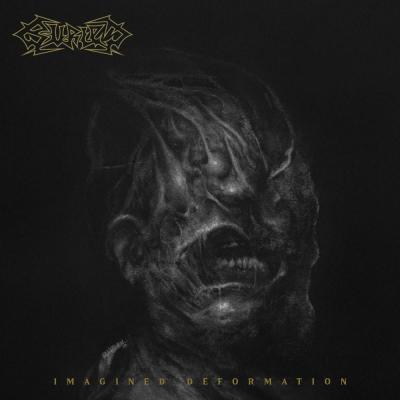 Buried - Imagined Deformation - 2026
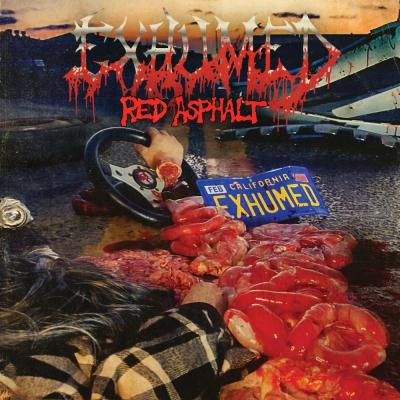 Exhumed - Red Asphalt - 2026
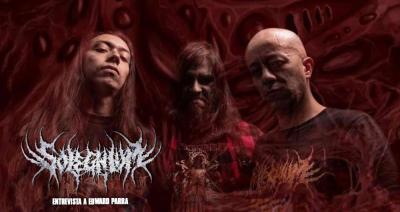 Entrevista a Solegnium (Edward Parra)
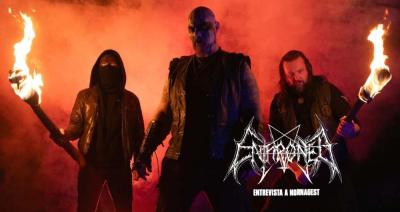 Entrevista a Enthroned (Nornagest)
 Entrevista a Sun of the Dying (Daniel y Roberto)
 Entrevista a Putrid (Miguel Ángel Beraun)
 Entrevista a Phobocosm (Samuel Dufour)
 Bandas Suecas que cambiaron las reglas del juego en el Metal mundial
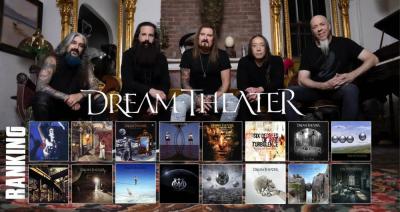 Ranking de lo peor a mejor de Dream Theater
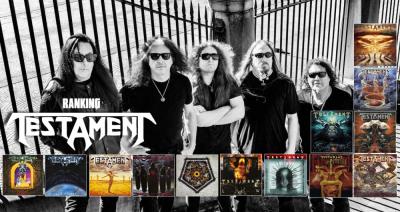 Ranking de lo peor a mejor de Testament
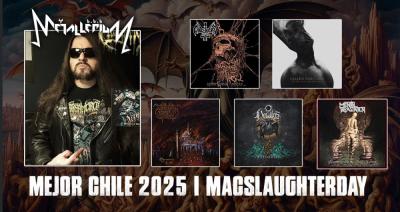 Lo mejor de Chile 2025 (Macslaughterday)
 Lo mejor del 2025 (Vlad)
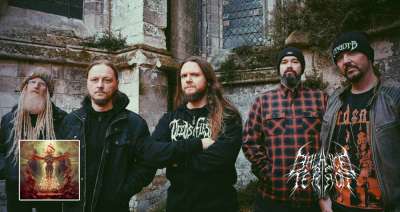 Balance of Terror presentan nuevo sencillo Inebriated Perversity de nuevo álbum Addicted to Any Kind of Rot
 Sercifer
 25.09.2026
  38
38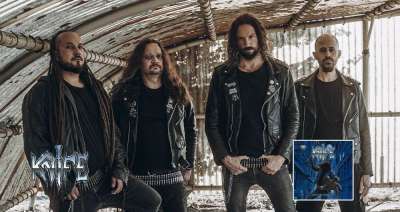 Knife presentan nuevo sencillo Shadows de nuevo álbum Into Your NightmareSercifer 25.09.2026 35
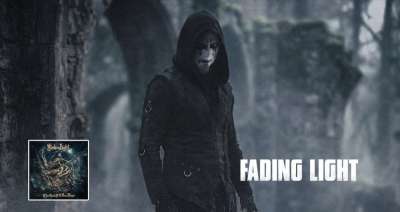 Fading Light presentan nuevo sencillo Seeds of Death de nuevo álbum The Spell of a new DawnSercifer 25.09.2026 44
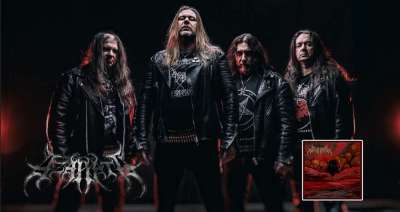 Azarath presentan nuevo sencillo Herald of the Unseen de nuevo álbum Scorn EternalSercifer 25.09.2026 40
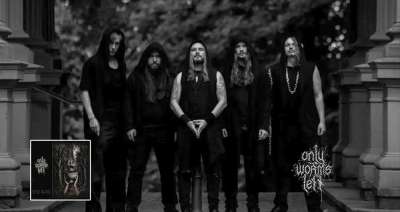 Only Worms Left presentan nuevo sencillo MCCCCCXXXV de nuevo álbum Beneath The Earth, At One With FearSercifer 24.09.2026 63
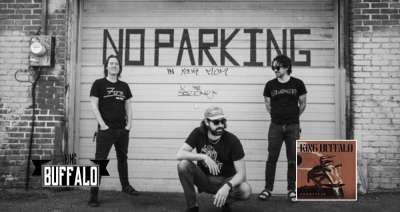 King Buffalo presentan nuevo sencillo The Slick and the Dead de nuevo álbum DoomsayerSercifer 24.09.2026 61
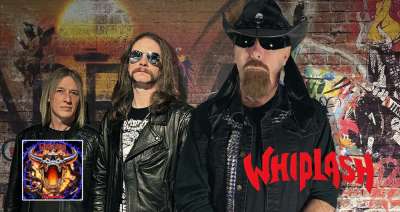 Whiplash presentan nuevo sencillo Bullet Train de nuevo álbum ROARSercifer 24.09.2026 74
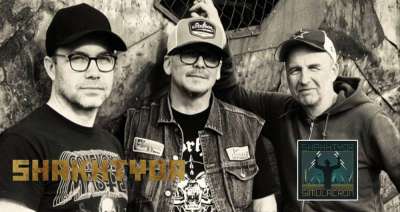 Shakhtyor presentan nuevo sencillo Das Sechste Siegel de nuevo álbum SimulacronSercifer 24.09.2026 54
 Fused
Fused Zeratulstra 09.09.2026 242
 Crack the SkySercifer 07.09.2026 265
 A Social GraceSercifer 07.09.2026 294
 The Magnificent Rebirth Of A Mighty Old EmpireSercifer 07.09.2026 290
 The Puppet MasterGocho 12.08.2026 628