Sercifer
  02.12.2025
  5155
5155
Qrixkuor is a British band that formed in 2011, but they haven't released many full-length albums. Their career has been more focused on promotional singles and EPs, and their debut album, "Poison Palinopsia" (2021), was a well-crafted exploration of the swampy, dark path of death metal. Now, the band presents their second full-length album, "The Womb of the World," released through Dark Descent Records.
Para leer la entrevista en español: Entrevista a Qrixkuor
Metallerium: Welcome to Metallerium pages. It is a great pleasure to speak with you about Qrixkuor, this new album “The Womb of the World”, and more things related to Metal in general. Let’s start by asking, How are you doing today, and during the last three years after you released your first album?
Qrixkuor: Greetings, it’s a pleasure to be here. I am doing well, writing this in the weeks immediately following the release of our 2nd full-length album, ‘The Womb of the World.’ The past 3 years have largely been spent collecting, refining and recording the album – which was mastered in June 2024 and has been clearing various production hurdles in the near-18 months since – as well as preparing for the release in various ways such as creating a full 18-minute long music video to accompany the eponymous title track, which can now be viewed on the YouTube channels of both Invictus Productions and Dark Descent Records, our two labels. Other than this, my live and recording activities with Adorior and a plenty busy mundane schedule have kept me more than occupied.
Metallerium: Qrixkuor's music often evokes a sense of "inhuman" horror and a journey into the "aphotic depths of the divine". Could you elaborate on the specific mental or conceptual spaces you try to inhabit or channel during the writing and recording process?
Qrixkuor: Standing at the edge of the world at the 13th hour, dwarfed by the restless and relentless energies of the heavens above and of the oceans below. Consumed by the endless serenade of the moribund stars and the primordial growl of the bottomless seas, once formed, they were never still again. I don’t have to use my imagination because this is my shrine to the Devil. There is more than enough inhuman horror within the bounds of human existence to act as fuel for a billion fires. Those fires illuminate the very deepest of aphotic caverns. We are the dancing shadows that they cast onto the walls.
Metallerium: In past interviews, you've mentioned using entheogens and lucid dreaming as sources of inspiration for your lyrical and musical visions. How do these experiences translate into tangible musical decisions, such as specific harmonies, rhythms, or instrumentation in this new album?
Qrixkuor: As Iron Maiden so eloquently put it – beyond is where I learn. It’s always easier to trace a direct line between those experiences and the lyrics, because the imagery is so immediate. But in reality, the mindset that shapes the words and the mindset that shapes the worlds that the music inhabits are inseparable. What the journeys really provide is a way of perceiving connections - between emotions, colours, sounds - that you wouldn’t notice in a waking, linear frame of mind. From there, every musical decision becomes part of a larger web. A harmony might echo the emotional texture of a dreamlike environment - a rhythm might mimic the pulsing, nonlinear sense of time you feel in those states. Even choices in instrumentation come from that same place - certain timbres feel like they ‘belong’ to the landscape and so belong to the soundscape. Sometimes this is conscious, and sometimes it isn’t. The general rise and fall of Qrixkuor’s long-form structures are synonymous with entheogenic experience – often they actually do not make ‘sense,’ because often an experience doesn’t. To pretend otherwise would be completely ingenuine. Anyone assuming that the world of mind-altering substances must all be fun and games has a lot of lessons ahead of them. It feels prudent to mention that my last experience with entheogens occurred before the release of ‘Zoetrope.’ Whilst I will likely answer the call again at some point in the not-so-distant future, I do have more than a lifetime’s worth of data to encode already.
Metallerium: You have a master's degree in composing music for film and television S. How does this academic background and knowledge of composition theory influence the band's writing process, especially given the often chaotic and atmospheric nature of the music? Qrixkuor: The music and associated mindsets that I was introduced to throughout those years were probably as big an influence as the teaching itself – those are the most vivid memories that I have, rather than any specific lecture or mentor. Additionally, being generally exposed to ‘actual’ musicians and their instrumental and scoring techniques gave me a much higher appreciation for their abilities, while also providing me with much of the basic lexicon to converse somewhat more closely to their level and extract the performances that I desired years later with
Qrixkuor. It also taught me that I would probably never actually work in the industry, finding working to anyone’s brief other than my own occasionally enjoyably challenging but often relatively miserable, and also that truly effective art generally breaks rules rather than follows them – organised education is designed to get as many people as possible from point A to point B with the least effort possible, and the quickest route to achieving that is to pretend that the same rules exist for everyone. It’s difficult to teach breaking out of structure within a structured teaching programme, even if I can appreciate looking back that I encountered some very skilled and wise tutors who did their utmost to do so.
Metallerium: Your compositions are lengthy, complex, and clearly intended to be experienced as a holistic journey rather than a collection of individual tracks. What is the process like for structuring these sprawling pieces to ensure they maintain their intensity and sense of purpose throughout their duration?
Qrixkuor: They are telling a story as much as the written words are, both over the course of the ‘individual’ tracks and of the album as a whole. I stress that word because I regard the pieces as chapters of the same book, and how they are divided and numbered on the back of the vinyl is one of the least significant parts of the process. On the debut album and last EP, we chose not to divide them at all other than by the necessity of turning the record over halfway through - every release is intended to be consumed as a whole, and I cannot see how skipping any part would not dilute the experience significantly. The pieces are structured as chapters would be – individually but always with one eye on the whole. It would be fairly obvious to attribute our style of structuring material to the influence of certain classical composers or to the ebb and flow of an effectively executed cinematic score, but a simpler answer found much closer to home is the impact of Iron Maiden’s long form works, both in the 80s and also the reunion albums of the early/mid-2000s, the period in which my discovery of that band kickstarted my ongoing voyage into the abyss.
Metallerium: How do you balance the raw, visceral energy of death metal with the more nuanced and eerie atmospheres created by the orchestral and electronic elements you incorporate in both albums, with the expression of Death Metal style?
Qrixkuor: They are one and the same - an extension of each other. I could say that the visceral element is the heart and the nuanced is the head, but in truth they are both the heart. Like many facets of the band’s work, it is difficult to describe a process that occurs without much rational thought. In essence, the balance is achieved by not worrying about achieving balance, and we have simply been getting better at executing it as time has gone on.
Metallerium: The title "Poison Palinopsia" refers to a visual disturbance and the experience of "eternal return" in a purgatorial sense. Could you discuss how this concept is musically represented in the album's two epic tracks?
Qrixkuor: Palinopsia refers to that lingering after-image of horrors and revelations that refuse to leave the mind’s eye – the serpentine susurrus of Mother Death’s abomination. Both tracks are built around ideas that keep returning, a little more warped each time they recur - like memories poisoned by infinite repetition. You recognise the shape of the motif, but it feels different, more intense – the recrudescent malevolence of her illumination. Structurally, the tracks move in grandiose circular arcs. They rise, collapse, and then rise again, almost as if they are trying to escape their own gravity but never quite make it out. Hence, ‘eternal return’ - always being pulled back to the starting point, but the starting point has changed because you yourself have changed by the time you get there. It creates this purgatorial feeling, as if the music is trapped in its own afterimage. A mind that has wandered so far that it cannot return…
Metallerium: The artwork for your albums, such as Daniel Corcuera's cover for Poison Palinopsia, is highly evocative. How closely do you work with the artists to ensure the visuals align with the esoteric visions and concepts of the music?
Qrixkuor: I tend to provide them with working demos and drafts of the music and lyrics that they are illustrating, perhaps an overall synopsis and context for the work, and then let them run with it. The point of bringing in an outside force to create the artwork in the first place is for them to act as a lens for the material to flow through to reveal wild, new shapes in the universe. The work, being my own interpretation of the intention, both in sound and in words, I want the artist’s interpretation of the material in visual form, one that I would never possess the talent or insight to fathom creating. With a few exceptions, to guide the portrait too literally would contradict this. I have not yet been disappointed with the results of such an approach.
Metallerium: With your latest album, "The Womb of the World", further pushing the boundaries of your sound, what new thematic territories or conceptual horrors were you exploring that differ from your previous works like Zoetrope or Poison Palinopsia?
Qrixkuor: The previous 2 releases focused largely on the horrors of other worlds - this album draws more from the horrors of this. That is not to say that the material has become any less inhuman or extraordinary, or, consequently, that the prior material dealt with anything that wasn’t very real indeed, more than ‘The Womb of the World’ takes a step back through the veil to focus on the veil itself.
Metallerium: The band's line-up has seen changes, with key musicians like Phil Kusabs (Vassafor) and DBH (Grave Miasma) contributing to the studio. How has the dynamic of collaborating with these unique musical personalities shaped the current sound and direction of Qrixkuor?
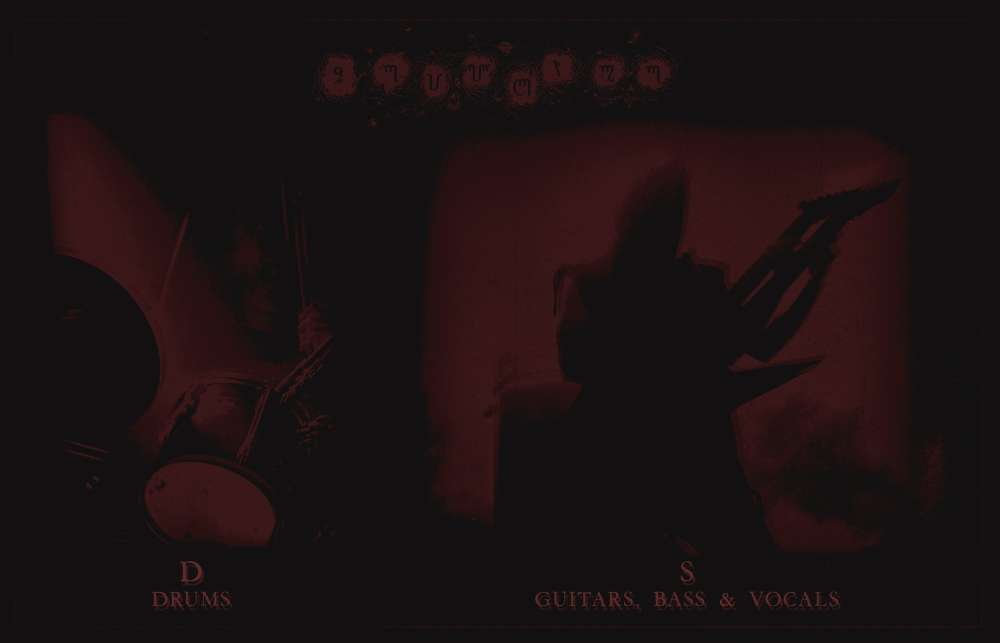
Qrixkuor: You learn something from everyone - one way or another - and all of our past members contributed significantly to the egregore of the band. The current line-up, operating as a duo with my colleague D (drums) and our symphonic collaborators lurking just out of sight, has been and continues to be the purest and most effective Qrixkuor constellation. That means that a large amount of the burden falls upon me, but at least I only have myself to blame if it goes wrong.
Metallerium: Given the geographical separation of members and the intricate nature of your studio recordings, is it challenging to translate the music into a live setting? Do you have plans for more live performances or tours in the future, and for this album?
Qrixkuor: Geographical separation has ceased to be an issue, but the intricacies of replicating recordings made up of 15+ musicians make the proposition at best logistically improbable and at worst impossible. Until we have an answer to the question of how we would do this effectively, which I currently do not, my belief is that it would be better not to happen at all. I am not ruling out playing live in the future, whether that be performing music from the latest album in some form or parts of the previous material with less demand for extended personnel, but it is not currently a priority, and there are no plans. However, I accept that it would be a shame if we were never to do so again.
Metallerium: What, in your view, is the ultimate purpose or goal of Qrixkuor's music? What do you hope a listener takes away from a dedicated, immersive listen to one of your records?
Qrixkuor: The purpose is to give voice to the sinister energies inside my being until the time comes that they have said all that they have to say. It is a goal that would be both satisfying and saddening to genuinely achieve.
I would hope that the listener is as exhausted, ecstatic, aghast and genuinely affected as I myself was in my formative years when first listening to Slayer or Mayhem, or when seeing Morbid Angel for the first time as a teen. That is the air of horrified wonder to the point of speechlessness - of feeling that you had seen something of the beyond that could never be unseen - that appears all too occasionally these days and that I wish to encapsulate within Qrixkuor. It was overwhelming and genuinely affecting - the polar opposite of much of the drastically oversaturated metal and wider music landscape that cannot ever act as anything more than background noise. I don’t mind at all if you want to put ‘Stained Class’ on the turntable after ‘The Womb of the World’ – in fact, I’d encourage it - but I’d hope that one would at least require a period of quiet contemplation first.
Metallerium: Thank you for the interview; it was a pleasure speaking with you. This new album, "The Womb of the World," is tremendous; I pre-ordered it, and I'm just waiting for it to arrive. Perhaps you'd like to add something for your Latin American fans and Metallerium followers?
Qrixkuor: Thank you for the interview and your words on the album. My warmest regards to all readers of your site and supporters of our work – remember, the only truly failed art is that which lacks ambition.

 Megadeth - Megadeth - 2026
 Karnivool - In Verses - 2026
 Locus Noir - Shadow Sun - 2026
 Buried - Imagined Deformation - 2026
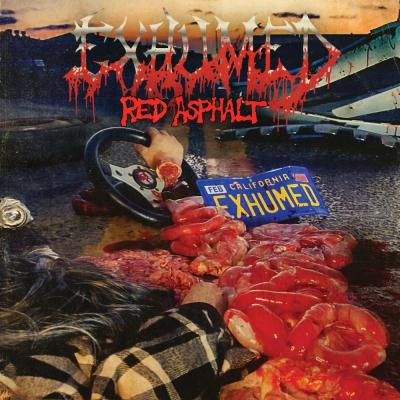 Exhumed - Red Asphalt - 2026
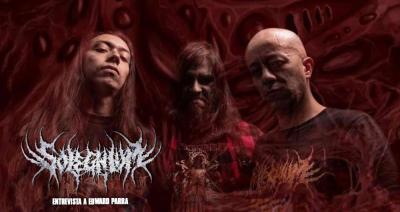 Entrevista a Solegnium (Edward Parra)
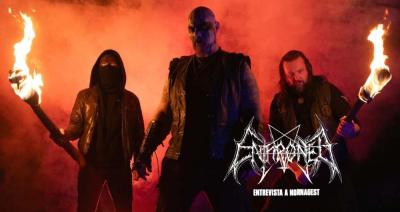 Entrevista a Enthroned (Nornagest)
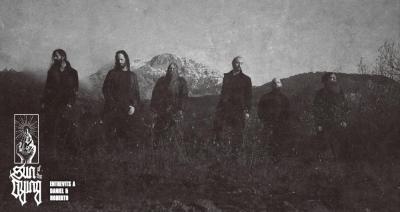 Entrevista a Sun of the Dying (Daniel y Roberto)
 Entrevista a Putrid (Miguel Ángel Beraun)
 Entrevista a Phobocosm (Samuel Dufour)
 Bandas Suecas que cambiaron las reglas del juego en el Metal mundial
 Ranking de lo peor a mejor de Dream Theater
 Ranking de lo peor a mejor de Testament
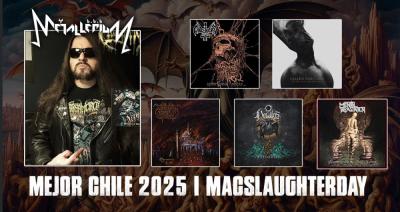 Lo mejor de Chile 2025 (Macslaughterday)
 Lo mejor del 2025 (Vlad)
 Echoid presentan nuevo sencillo Break The Circuit de nuevo álbum The Silent Era
 Sercifer
 21.10.2026
  62
62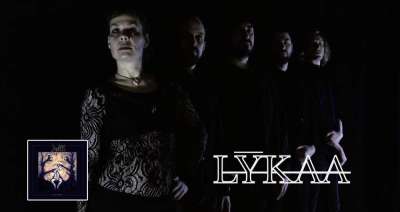 Lȳkaa presentan nuevo sencillo At His Behest de nuevo álbum Light EaterSercifer 21.10.2026 66
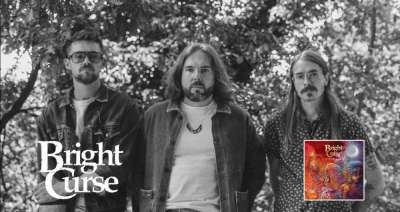 Bright Curse presentan nuevo sencillo The Fates de nuevo álbum FatumSercifer 21.10.2026 74
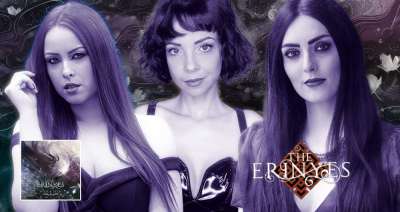 The Erinyes presentan nuevo sencillo Agony & Ecstasy de nuevo álbum Hide And SeekSercifer 21.10.2026 75
 Empath presentan nuevo sencillo Only The Dead de nuevo álbum homónimoSercifer 20.10.2026 100
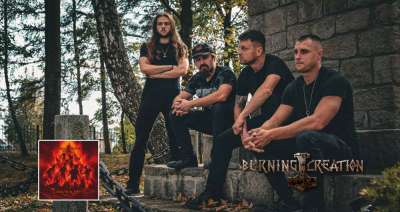 Burning Creation presentan nuevo sencillo Nothing's Gonna Save You de nuevo álbum Breath of FireSercifer 20.10.2026 97
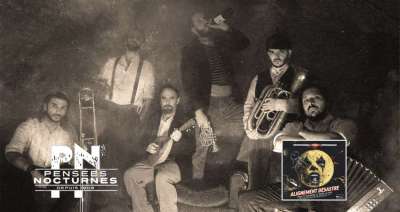 Pensées Nocturnes presentan nuevo sencillo Et Merde... de nuevo álbum Alignement DésastreSercifer 20.10.2026 104
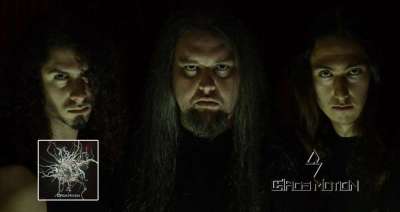 Chaos Motion presentan nuevo sencillo Paroxysmal Entity de nuevo álbum homónimoSercifer 20.10.2026 102
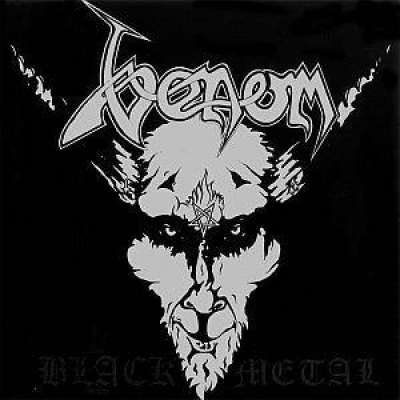 Black Metal
  Sercifer 08.10.2026 253
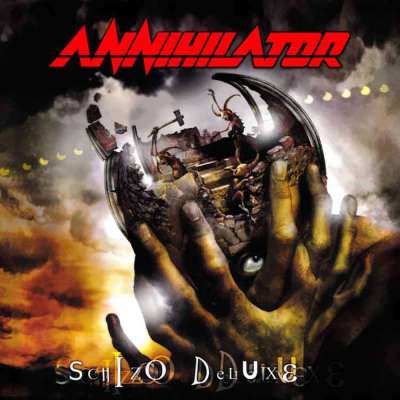 Schizo DeluxeSercifer 08.10.2026 251
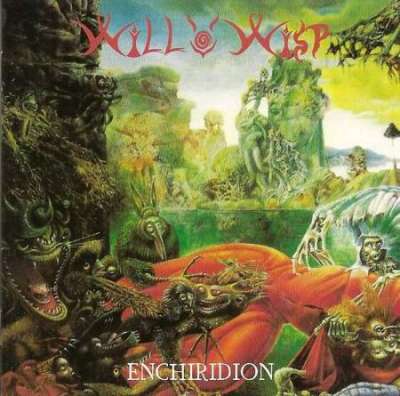 EnchiridionSercifer 08.10.2026 225
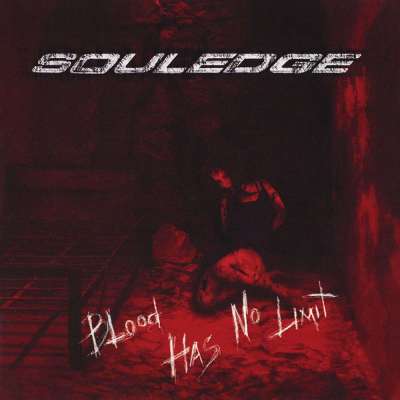 Blood Has No LimitSercifer 08.10.2026 317
 FusedZeratulstra 09.09.2026 565